Putting Yourself First at Christmas Isn’t Selfish. It’s Leadership
Putting Yourself First at Christmas Isn’t Selfish | Jo Renshaw Life Coach, Brighton
Christmas has a funny way of pulling even the most self-aware women back into old roles.
You might notice it happening subtly at first. You start saying yes more quickly and people‑pleasing at Christmas. You take on a little extra, and smooth things over. You anticipate needs before they’re spoken, and tell yourself it’s fine, it’s only for a few days, it’s Christmas after all.
And somewhere along the way, you realise you’re doing it again.
This isn’t because you’ve failed at your inner work. It’s because Christmas has a way of reactivating old family dynamics, long-standing expectations, and deeply ingrained ideas about what it means to be “good”, “loving”, or “easy to be around”.
For many women, especially those used to leading, caring, and carrying responsibility, Christmas becomes less about rest and connection and more about effort and endurance. This blog is your loving reminder that putting yourself first isn’t selfish
In this blog, you’ll learn why Christmas so often pulls you back into reassurance‑seeking and self‑abandonment, how putting yourself first can feel uncomfortable but deeply grounding, and what it actually looks like to lead yourself differently during the festive season. Most importantly, you’ll see how choosing yourself helps you stay anchored in who you are, rather than losing yourself in old roles and expectations.
Why Christmas Triggers Reassurance-Seeking
At Christmas, the emotional volume gets turned up. There’s more time together. More history in the room and unspoken expectations. There’s pressure for things to feel a certain way.
How family dynamics reactivate old roles
When you’re giving a lot, practically and emotionally, it’s natural for a part of you to want some kind of reflection back, whether it’s from your Mother, or Mother-in-Law, husband or Sibling. A thank you moment of appreciation, or sign that your effort matters.
And when that doesn’t come in the way you expected, your mind can start filling in the gaps.
You might notice yourself reading into tone, reactions, or silence. Wondering if you’ve done enough. Questioning whether you’re valued. Feeling strangely unsettled even when everything looks “fine” on the surface.
This is often described as needing reassurance, but at its core, it’s about something deeper.
It’s about where you’re sourcing your sense of worth.
Read this blog on how to feel valued in your relationships for more on this subject
When Putting Yourself First Feels Selfish (But Isn’t)
For many women, putting themselves first at Christmas feels almost transgressive.
We’ve been taught, explicitly and implicitly, that this season is about selflessness. About making others happy, and not rocking the boat. Keep pushing through discomfort for the sake of togetherness.
So when you pause before saying yes, or decide not to attend something, or choose rest over obligation, the internal commentary can be loud.
You’re being selfish.
It’s only once a year.
You should be able to manage this.
But here’s the truth beneath that noise:
What we often label as selfish is actually the discomfort of not abandoning ourselves.
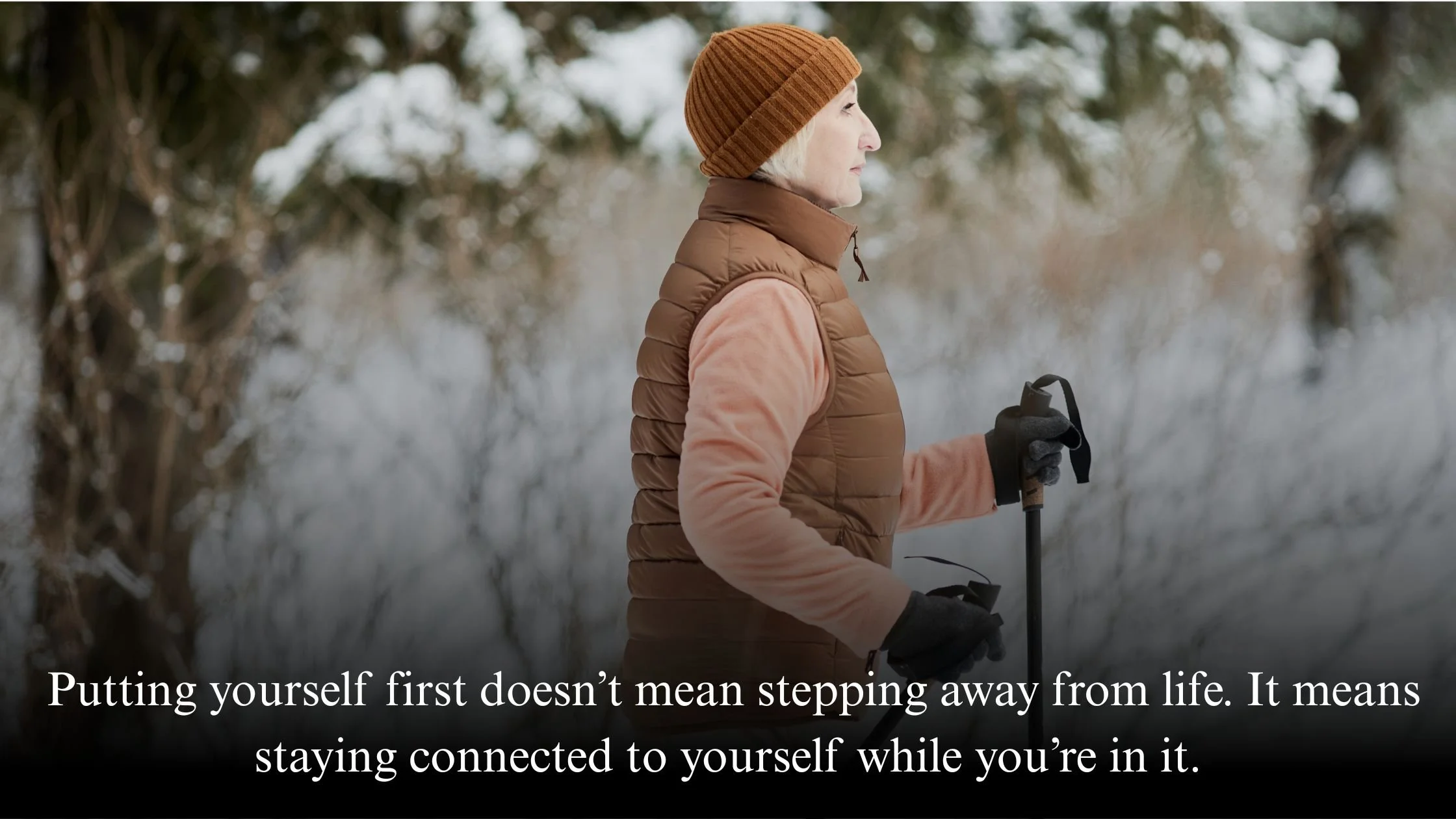
Putting yourself first doesn’t mean withdrawing from love or connection. It doesn’t mean becoming rigid, cold, or unavailable. It means staying in relationship with yourself while you’re in relationship with others.
It means checking in rather than overriding. Choosing consciously rather than automatically. Letting your needs matter without needing permission.
The Cost of Not Putting Yourself First
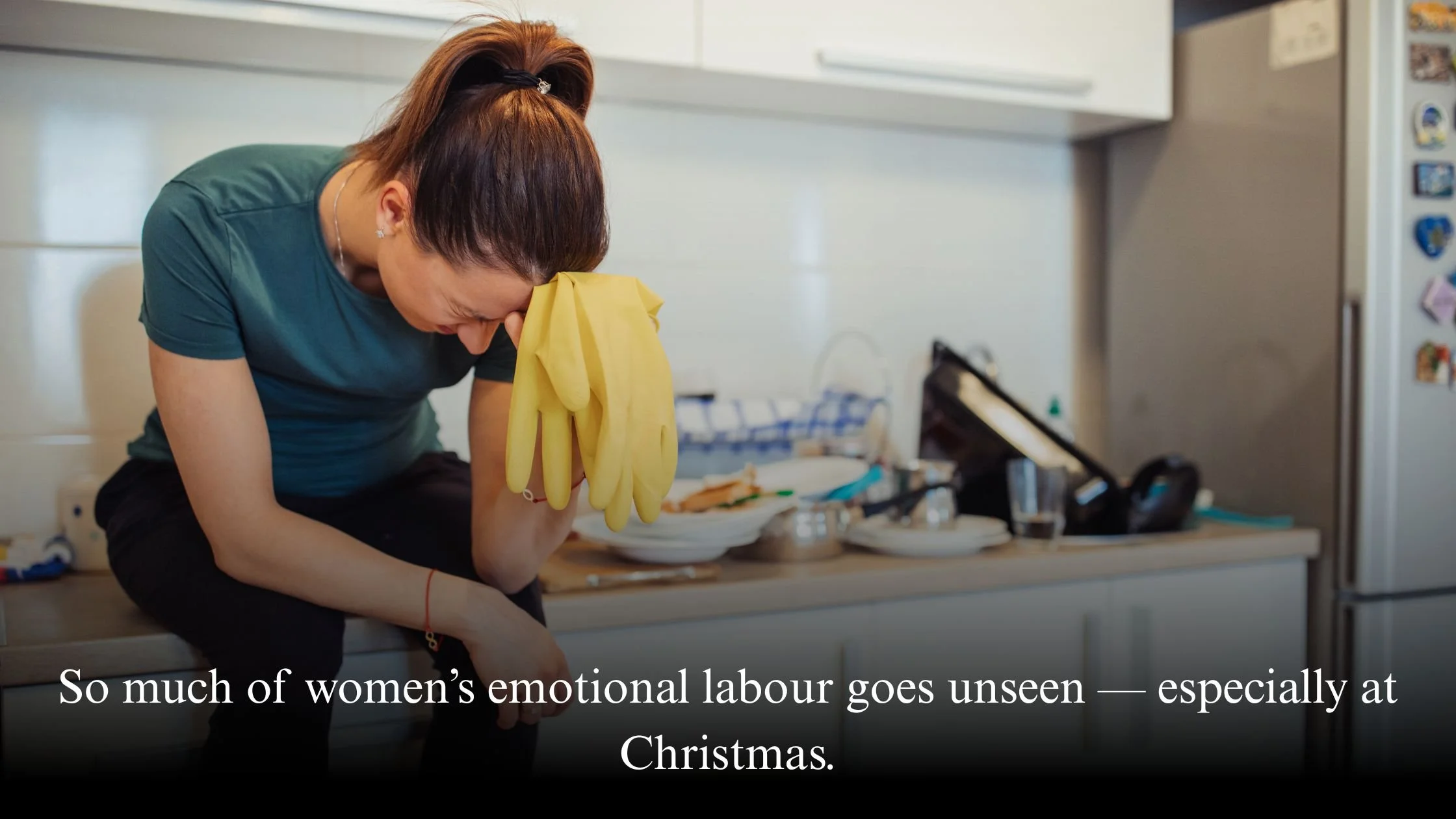
When you don’t put yourself first, the cost isn’t always obvious in the moment. Often, it shows up afterwards.
The emotional flatness once the decorations come down. The sense that you gave a lot but didn’t feel nourished in return. The subtle erosion of self-trust that comes from repeatedly telling yourself you’ll rest later, speak up later, matter later.
Every time you override yourself, your nervous system learns something.
It learns that your needs are negotiable.
That your limits are flexible.
That your worth is conditional on how much you give.
And over time, that pattern doesn’t just drain your energy, it weakens your sense of self.

What Your Daughter Is Learning When She Watches You at Christmas
If you have a daughter, Christmas is not a neutral time.
It’s a live demonstration of how women relate to themselves inside relationships, expectations, and emotional responsibility.
Your daughter isn’t learning from what you tell her about self-worth or boundaries. She’s learning from what you tolerate, how you speak to yourself when you’re tired, and whether rest needs justification.
She’s watching how you handle disappointment, both yours and other people’s. She’s noticing whether love requires self-sacrifice, and absorbing whether saying no is dangerous, selfish, or simply part of being human.
Putting yourself first at Christmas isn’t a personal indulgence. It’s leadership by example.
It shows her that women don’t have to disappear to be loved. That care doesn’t have to come at the cost of self-respect. That emotional responsibility doesn’t mean carrying everyone else’s feelings at the expense of your own.
What Leadership Looks Like at Christmas
Leadership at Christmas doesn’t look like control or perfection. It looks like self-respect in motion.
Self‑respect over people‑pleasing
Self respect over people pleasing looks like pausing before you commit. Leaving when you’re done, not when it’s polite. Letting someone else feel disappointed without rushing to fix it. Choosing rest without explaining or defending yourself.
It’s not loud. It’s not performative. And it doesn’t require anyone else’s approval.
Leadership, in this sense, is internal. It’s the ability to stay anchored in yourself even when old patterns are pulling at you.
A Different Question to Carry This Christmas
Instead of asking, How do I make this work for everyone? or, How do I get through this without conflict?
Try asking yourself this:
If I wasn’t looking for reassurance right now, what would I choose?
That question brings you back to yourself. It interrupts people-pleasing without creating defensiveness. It strengthens self-trust rather than relying on external validation.
And often, the answer is simpler and kinder than you expect.
A Different Kind of Christmas Win
A “successful” Christmas isn’t one where everyone is happy all the time. It’s one where you didn’t disappear. And you can read more about putting yourself first here
Where you stayed connected to yourself, and your choices came from self-respect rather than guilt. A different kind of festive season where you modelled what it looks like to be a woman who leads her life from the inside out.
Putting yourself first at Christmas isn’t selfish. It’s leadership.
This blog is inspired by the work I do with my clients during sessions, and brought to you in partnership with AI.




Feeling Stuck? Here’s How to Get Your Life Back on Track - Without the Overwhelm
Have you ever wished you had a personal coach to tell you exactly what to do to improve your life - without having to second-guess yourself, waste time figuring it all out alone, or add more to your already full plate?